See some real stars this Spring Break at the George Observatory — now with extended hours!

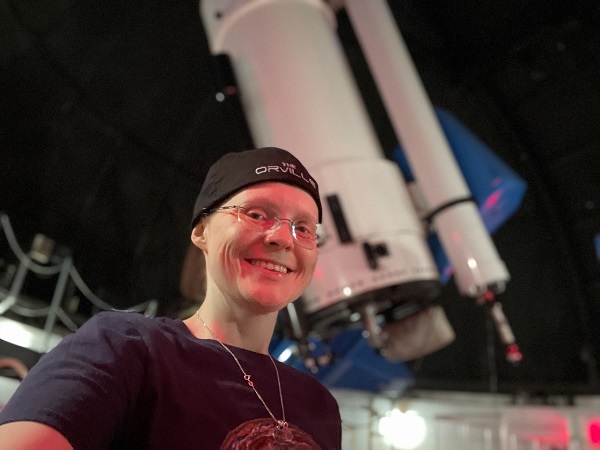
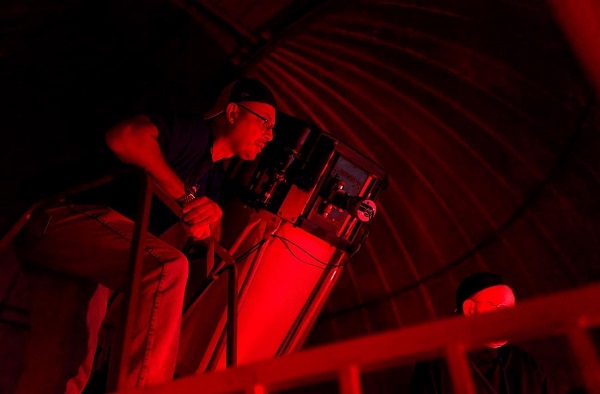
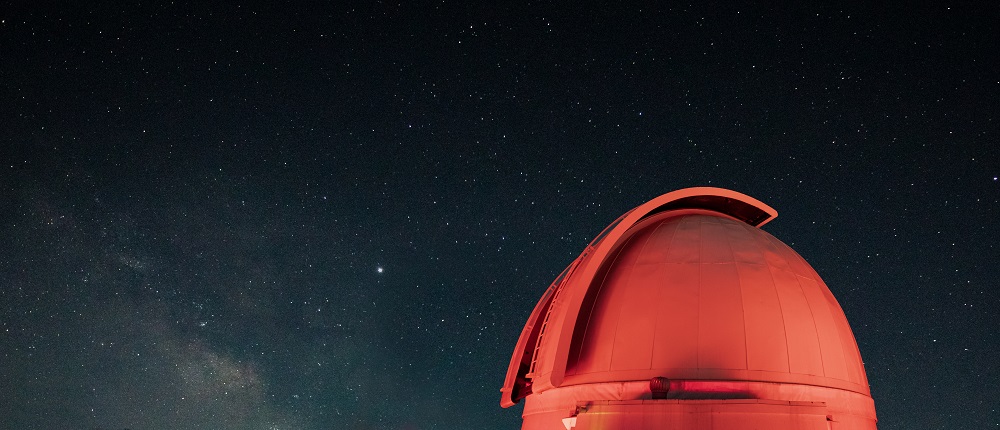
While some folks might think sun and sand for Spring Break, we’re thinking moon and stars. The George Observatory — an HMNS satellite facility located inside Brazos Bend State Parkwill be open for two additional days over Spring Break this year: Tuesday, March 12 and Thursday, March 14 from 5 to 10 p.m.

George Observatory

Virtual missions to outer space will be available via our portable Discovery Dome, while tickets to view the night sky through our professional research telescopes will go on sale at 5 p.m.

For more information, including directions and pricing, click here!

Seeing Stars with James Wooten: February 2013

Mercury briefly enters the evening sky this month. Greatest elongation (the greatest apparent distance from Sun) is February 16, so that’s when you’ll see it the longest.  However, you can begin looking in a few days. Because Mercury sets soon after the Sun, you’ll need a perfectly clear horizon right over the point of sunset at dusk.  On February 8, Mercury passes less than one degree from Mars, which is on its way out of the evening sky.

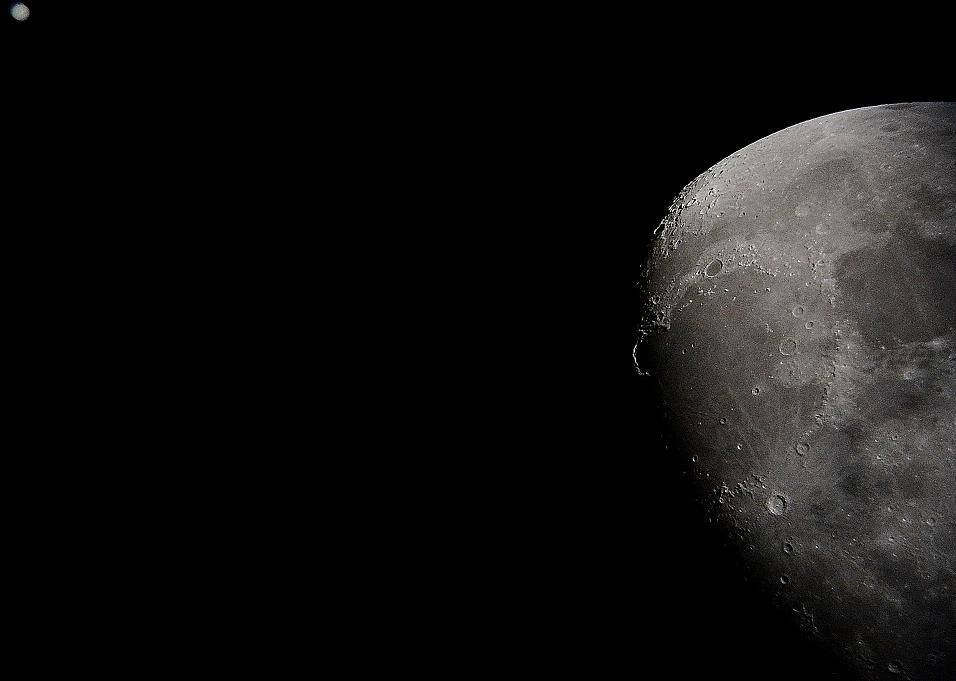
Jupiter was up all night long last month and is now almost overhead at dusk. Opposition, when Earth passed directly between Jupiter and the Sun, was January 3. Face high in the south at dusk and look for the brightest thing there (unless the Moon is also there), as Jupiter outshines all stars we ever see at night.

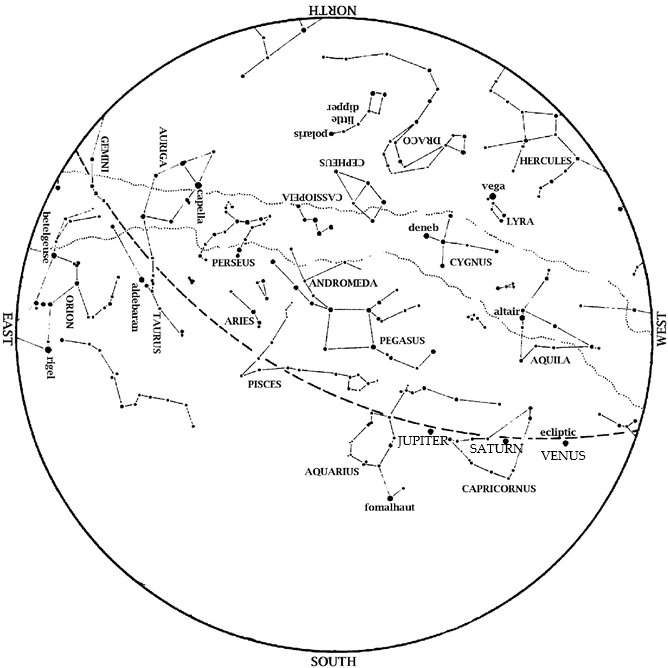
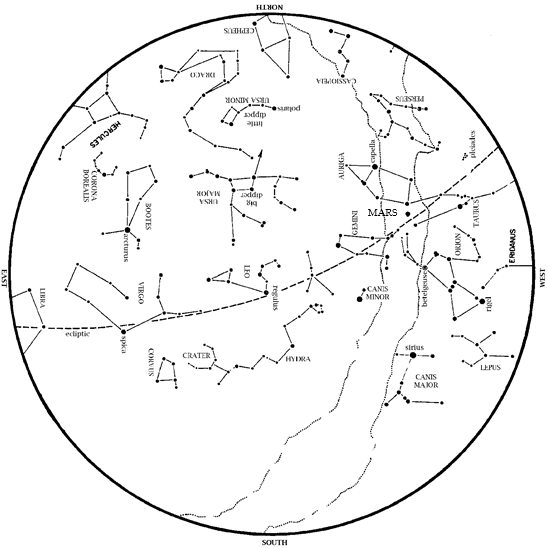
Sky Map: February 2013

Venus now rises while dawn brightens the sky; its morning apparition is ending. Soon Venus willl pass around the far side of the Sun from our perspective, and then reappear in the evening by summer.

Saturn remains in the morning sky this month. Look for it in the south-southwest at dawn.

Brilliant winter stars dominate the southern skies of February. Dazzling Orion is almost due south at dusk. His three-starred belt is halfway between reddish Betelgeuse and bluish Rigel. Orion’s belt points up to Aldebaran in Taurus the Bull. This winter the Bull also contains Jupiter.

Rising with Orion, and far to his left, are the twin stars Castor and Pollux, marking the heads of Gemini, the Twins. You can find Sirius, the brightest star we ever see at night, by drawing a line from Orion’s belt towards the horizon. To Orion’s left, about level with Betelgeuse, is Procyon, the Little Dog Star.

From Sirius, look a little bit to the right and then straight down to the horizon.  If your southern horizon is clear of clouds and tall earthly obstacles, you’ll see Canopus, the second-brightest star ever visible at night. This star is so far south that most Americans never see it, and many star maps made in the USA omit it. (You must be south of 37 degrees north—the latitude of the USA’s Four Corners—for Canopus to rise).

As you view Canopus, keep in mind that the sky we see depends on our latitude as well as on time of year and time of night.

Moon Phases in February 2013:
Last Quarter                  February 3, 7:57 am
New                               February 10, 1:22 am
1st Quarter                    February 17, 2:30 pm
Full                                February 25, 2:28 pm

The New Moon of February 10 is the second New Moon after the winter solstice.  Accordingly, it marks Chinese New Year. On this date the Year of the Dragon ends and the Year of the Snake begins.

On most clear Saturday nights at the George Observatory, you can hear me do live star tours on the observation deck with a green laser pointer. If you’re there, listen for my announcement.

To enjoy the stars in any weather from the comfort of the HMNS Planetarium, click here for a full schedule.

Would you like email updates on current events in the sky, at the planetarium, and at the George Observatory?  If so, send an email to astroinfo@hmns.org.

Seeing Stars with James Wooten: January 2013

Happy New Year! This January, Mars continues to fade as it drops into the Sun’s glare. It is low in the southwest at dusk.

Jupiter is now up all night long. Opposition, when Earth is directly between Jupiter and the Sun and Jupiter literally rises at sundown and sets at sunup, is Jan. 3. After that date, Jupiter only gets higher and more prominent in the evening sky. Face east/northeast at dusk and look for the brightest thing there (unless the Moon is also there), as Jupiter outshines all stars we see at night.

Venus is lower in the east at dawn than before. You can still observe it this month and next.

Saturn is a little higher in the morning sky this month. Look for it just in the south at dawn.

Sky Map: January 2013

The Great Square of Pegasus sets in the west, while brilliant winter stars shine in the south. Orion, the Hunter, is almost due south. His two dogs, represented by Sirius and Procyon, are to his left. Above Orion is Taurus, the Bull with Aldebaran as its eye. Gemini, the Twins, are to Orion’s upper left. Jupiter, outshining all stars in the night sky, is in Taurus between Aldebaran and the Pleiades. In the north, the Big Dipper has been out of sight under the North Star for a while. In January, though, you can look for the two pointer stars, which point at the North Star, peeking over trees and houses to the north/northeast.

Moon Phases in January 2013:
Last Quarter                  January 4, 9:58 p.m.
New                               January 11, 1:44 p.m.
1st Quarter                    January 18, 5:45 p.m.
Full                                January 26, 10:39 p.m.

At 11 p.m. on Tuesday, Jan. 1, the Earth passed as close to the Sun as it will get this year. Thus, Earth is now just past perihelion. If we’re closer to the Sun now, why is it cooler (even in Houston)? Notice how low the midday Sun is right about now. Six months from now, take note of how high the Sun is in June and July. That’s what makes it so much cooler now and so hot then.

The Earth’s orbit is, in fact, almost perfectly circular; there is only a 3-percent difference between perihelion and aphelion distance. The 23.44-degree tilt of the Earth makes the Sun appear high if we tilt towards it and low if we tilt away, and dominates the small effect of Earth’s changing distance.

The latest sunrise of the year (at Houston’s latitude) occurs on Jan. 10. Earth, just past perihelion, has sped up a little in its orbit since it is a little closer to the Sun. As a result, sunrise, local noon, and sunset have been happening a little later each day since early December. The noon Sun is ever so slightly higher at noon each day since the solstice (Dec. 21), but as of today, the Sun is still very close to its solstice height. Beginning Jan. 11, the noon Sun’s greater height in the sky again becomes the dominant effect (as it is for most of the year). From then until June, sunsets are getting later while sunrises are getting earlier.

On most clear Saturday nights at the George Observatory, you can hear me do live star tours on the observation deck with a green laser pointer. If you’re there, listen for my announcement.

To enjoy the stars in any weather from the comfort of the HMNS Planetarium, click here for a full schedule.

Would you like email updates on current events in the sky, at the planetarium, and at the George Observatory?  If so, send an email to astroinfo@hmns.org.

HMNS is here to handle the holidays: Whether it’s goodies to wrap or stuff to do, we’ve got gifts galore

You’ve heard a lot lately about our Museum Store. But aside from finding everything from kids’ gear:

spikeosaurus backpack

To dorky duds:

solid, liquid, gas tee

To fine jewelry:

suzanna dai necklace

To funky stuff for your home:

elemental wine markers

. . . (all in-store OR online, we might add), you should also remember that we deal in fun.

For example, for the budding astronomer in your life, some NASA-grade astronaut gear might be suitable, but you could make his or her holiday STELLAR with telescope classes at the George Observatory. The George offers tailored classes for Go-To and computerized telescopes as well as for simple, non-tracking reflecting and refracting telescopes. Classes for each are offered on Jan. 5, with expert astronomers on-hand to help set up ‘scopes and get students started tracking those stars away from city light pollution in beautiful Brazos Bend State Park.

So while you’re wrapping up boxes this holiday season, be sure to think outside them. From membership to adult education to classes for kiddos, we’ve got you covered.