Talk Like a Pirate Day has passed, now onto another stellar holiday: International Observe the Moon Day!

Come join us at The George Observatory for a night of fun underneath the moon this Saturday, Sept. 22!

International Observe the Moon Day

It’s International Observe the Moon Night and this year’s theme is “Under the Same Moon.” Kiddos are invited to wear their pajamas and come listen to Moon stories and learn about the Moon phases in our Starry Room.

Bring the family for crafts like making Moon craters and enjoy an evening in our Challenger Learning Center with a “Mission to the Moon.” You’ll board the “SS Observer” spacecraft and take on different tasks as a family to land safely on the Moon.

The mission will start at 6 p.m., and the cost is $10 per person. Early registration is encouraged.

As the day falls into night, amateur astronomers will have their telescopes pointed toward the Moon and other celestial objects. With the Moon being at first quarter, the public will be able to see craters, ridges, and other prominent features of the landscape. There will also be a telescope set up with a video camera for an extra up-close-and-personal view.

To reserve tickets, click here!

Seeing Stars with James Wooten: September 2012

Mars remains an evening object. It is low in the southwest at dusk. Saturn is now in the west-southwest at dusk for one more month. By month’s end, it sets just after twilight ends.

Jupiter emerges higher into the morning sky this month. Look for it high in the south at dawn; it outshines all stars in that direction. Venus remains high in the east at dawn, continuing a spectacular morning apparition.

The Big Dipper is to the lower left of the North Star at dusk, with its handle pointing up and to the left. From that handle, you can ‘arc to Arcturus’, which is in the west at dusk.

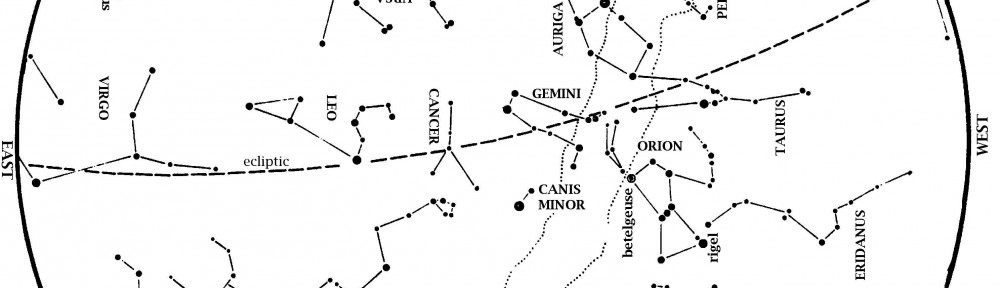
Sky Events | September 2012This star map shows the Houston sky at 10 p.m. CDT on Sept. 1, 9 p.m. CDT on Sept. 15, and at dusk on Sept. 30. To use the map, put the direction you’re facing at the bottom.

Antares, the brightest star of Scorpius the Scorpion, is in the southwest, with the ‘teapot’ of Sagittarius behind it. The Summer Triangle approaches the zenith (overhead point).   Pegasus, with its distinctive Great Square, has risen in the east.

Moon Phases in September 2012:
Last Quarter                  September 8, 8:15 am
New                               September 15, 9:09 pm
1st Quarter                    September 22, 2:41 pm
Full                                 September 29, 10:17 pm

At 9:47 a.m. on Saturday, September 22, the Sun is directly overhead at the equator, shifting towards the south. This, then, marks the autumnal (fall) equinox. On this date, everyone on Earth has the same amount of daytime and nighttime. Ever since the spring equinox in March, daytime has been longer than night for us in the Northern Hemisphere, while the reverse has been true in the Southern Hemisphere. After September 22, night is longer than day for us and the day is longer than the night below the equator.

The Full Moon of Saturday, September 29 is the Full Moon closest to the autumnal (fall) equinox. This, therefore, is the Harvest Moon. The angle between the ecliptic — the plane on which the Sun, Moon, and all planets appear — and the horizon is always shallowest near the fall equinox. As a result, moons near full phase at this time of year rise at almost the same time each night for a few days in a row. Farmers used this light to keep working their fields long into the night at harvest time.

On most clear Saturday nights at the George Observatory, you can hear me do live star tours on the observation deck with a green laser pointer. If you’re there, listen for my announcement.

To enjoy the stars in any weather from the comfort of the HMNS Planetarium, click here for a full schedule.

Would you like email updates on current events in the sky, at the planetarium, and at the George Observatory?  If so, send an email to astroinfo@hmns.org.

Seeing Stars With James Wooten: August 2012

Mars remains an evening object. It is in the southwest at dusk and has already entered Virgo, where Saturn also sits. This summer, you can watch Mars quickly approach Saturn, which it will pass on August 15.

Saturn is in the southwest at dusk this month just above the star Spica in Virgo, forming a nice triangle with Mars. Watch this triangle change shape as Mars approaches and then passes Saturn.

Jupiter emerges higher into the morning sky this month. Look for it high in the east at dawn; it outshines all stars in that direction.

August sky map

Venus, although farther from Jupiter than last month, is still getting higher and higher in the sky each morning.

The Big Dipper is to the left of the North Star, with its handle pointing up. From that handle, you can ‘arc to Arcturus’ and then ‘speed on to Spica’; those stars are in the west at dusk.

Antares, brightest star of Scorpius, the Scorpion, is in the south, with the ‘teapot’ of Sagittarius behind it. The Summer Triangle approaches the zenith (overhead point). By late evening, Pegasus — with its distinctive Great Square — has risen in the east.

Moon Phases in August 2012:
Full                                  August 1, 10:26 pm; August 31, 8:57 pm
Last Quarter                  August 9, 1:56 pm
New                                August 17, 10:53 am
1st Quarter                    August 24, 8:54 am

Just after midnight CDT on Monday, August 6, the rover Curiosity is scheduled to land on Mars. If all goes well, NASA will have a much bigger rover on the Red Planet, designed to explore a range of 5 by 20 kilometers for at least one Mars year (687 Earth days).  Curiosity’s four scientific objectives are: 1) determine if Mars ever had life, 2) study the climate of Mars, 3) study the geology of Mars, and 4) prepare for a possible human mission to Mars.

The Perseid Meteor Shower peaks every year around mid-August; this year it’s Sunday, August 12. Our George Observatory will remain open from Saturday night, August 11, through dawn on the 12th for observing the shower. However, any dark site where you can lie on your back and watch much of the sky at once will suffice. Keep in mind that the farther you are from city lights, the more meteors you’ll see.

As usual, you will see more meteors in pre-dawn hours than right after dusk. This is because the Earth is running into the stream of meteors rather than the other way around. As a result, the leading edge of the Earth — the side going from night to day — encounters the meteors. Meteors will seem to radiate from a constellation called Perseus (hence the name “Perseids”). In August, Perseus rises in the northeast at dusk and is high in the north at dawn. Thus, meteors will seem to radiate from the northeast.

On most clear Saturday nights at the George Observatory, you can hear me do live star tours on the observation deck with a green laser pointer. If you’re there, listen for my announcement.

During the summer, we have public nights on Fridays as well.  We are also now offering Sun-Day activities, featuring solar observation, on Sundays from noon to 5.

To enjoy the stars in any weather from the comfort of the HMNS Planetarium, click here for a full schedule.

Seeing Stars with James Wooten: July 2012

Mars remains an evening object. It is in the southwest at dusk and has already entered Virgo, where Saturn also is. This summer, you can watch Mars quickly approach Saturn, which it will pass on August 15.

Saturn is now in the southwest at dusk this month. Saturn is just above the star Spica in Virgo.

Jupiter emerges higher into the morning sky this month. Look for it low in the east/northeast at dawn; it outshines all stars in that direction.

Venus and Jupiter form a brilliant pair in the morning sky as July begins. Venus then pulls away from Jupiter as the month wears on. Still, it is getting higher and higher in the morning sky each day.

sky map july 2012

The Big Dipper is above the North Star, with its handle pointing up. From that handle, you can “arc to Arcturus” and then “speed on to Spica” — those stars are in the west at dusk.  Leo, the Lion, is in the west at dusk.

Antares — brightest star of Scorpius, the Scorpion — is in the southeast, with the “teapot” of Sagittarius rising behind it. The Summer Triangle has fully risen in the northeast.  The stars of summer are here.

Moon Phases in July 2012:
Full                                 July 3, 1:51 pm
Last Quarter                  July 10, 8:48 pm
New                               July 18, 11:23 pm
1st Quarter                    July 26, 3:56 am

At 10 p.m. Central Time on Wednesday night, July 4, as we celebrate with fireworks, Earth will be at its maximum distance from the Sun (aphelion). However, Earth’s orbit is so nearly circular that the small change in its distance from the Sun has little influence on our seasons. The Earth’s 23.5 degree tilt on its axis is much more important. That’s why we swelter when Earth is farthest from the Sun, but shiver when Earth comes closest (in January).

On most clear Saturday nights at the George Observatory, you can hear me do live star tours on the observation deck with a green laser pointer. If you’re there, listen for my announcement.

During the summer, we have public nights on Fridays as well.  We are also now offering Sun-Day activities, featuring solar observation, on Sundays from noon to 5.

To enjoy the stars in any weather from the comfort of the HMNS Planetarium, click here for a full schedule.