World-renowned malacologist Guido Poppe visits HMNS’ “magnificent” Hall of Malacology

HMNS’ Associate Curator of Malacology Tina Petway got a special treat last week in the form of one exceptionally dapper shell expert. World-renowned Belgian malacologist Guido Poppe traveled to Houston for the express purpose of visiting our museum and surveying our utterly impressive (and at times underappreciated) Hall of Malacology.

Renowned malacologist Guido Poppe visits the HMNS Hall of Malacology | June 27, 2012It was Poppe’s first visit to HMNS and was spurred on after he met Petway at a malacology conference in Philadelphia. “We’ve never had someone at this level come and visit,” Petway said of Poppe, who has authored numerous reference books on shells in the Phillipines — where he now lives — and has named nearly 200 new species.

Renowned malacologist Guido Poppe visits the HMNS Hall of Malacology | June 27, 2012Guido Poppe with HMNS Associate Curator of Malacology Tina Petway

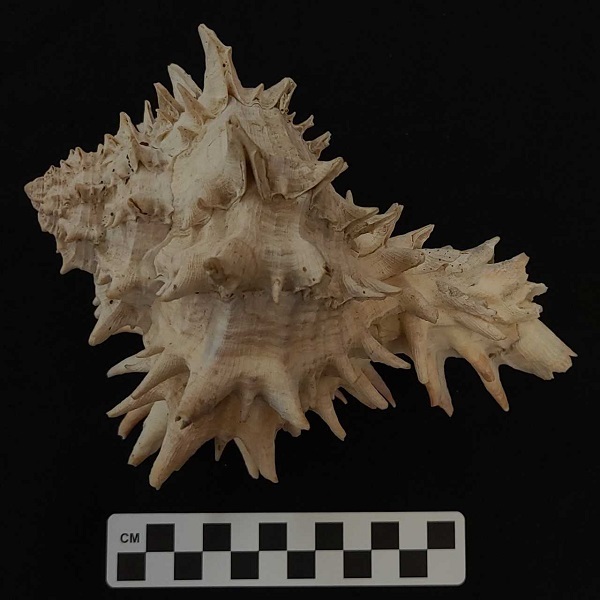
Poppe was particularly impressed with a yellow Spondylus, or spiny oyster, on display.

“These are really rare; there are less than a dozen in the world,” Poppe said.

And even this world-traveling diver was impressed by the world’s largest sea shell, on display here at the HMNS Hall of Malacology. “I’ve never seen one this big!”

Renowned malacologist Guido Poppe visits the HMNS Hall of Malacology | June 27, 2012To schedule your next visit to our impressive Hall of Malacology, click here for tickets, and check out our Flickr photo set of the visit here.

Oil Spills and their Impact on the Environment

Today’s Guest Blogger is Wes Tunnel, Ph.D. , marine biologist who has studied oil spills and their impact on the environment. For over 40 years he has helped develop the National Spill Control School. Dr. Tunnell, is Associate Curator of Malacology at the Houston Museum of Natural Science and Associate Director of the Harte Research Institute for Gulf of Mexico Studies and Professor at Texas A&M University-Corpus Christi. Dr.

Studying oil spills is not something many scientists do as a planned area of study for their advanced degree. Unless they are at a university near a major spill, they likely will not get engaged in studying oil spills unless one happens “in their back yard.”

That is exactly what happened to me early in my career as a marine scientist, and it is what happened to many scientists across the northern Gulf of Mexico last year (2010) with the Deepwater Horizon/Macondo spill.

Gulf Coast Oil Spill

I first had the opportunity to start learning about oil spills and their effect on the environment in the mid-1970s when our university received a grant to develop the first oil spill training program in the United States.

It took about two years of gathering information and interviewing people for the leaders of this program to establish the National Spill Control School at Texas A&M University-Corpus Christi (then called Texas A&I University at Corpus Christi). The week-long classes established for the School included specialists lecturing on the biological, chemical, and physical aspects of oil and its impact on the environment, and it also covered aspects of policy, law, social impacts, clean up techniques and strategies, and a whole realm of related topics. Attendees would see newly created movies, as well as vintage ones of previous oil spills, and they would get field experience in working with booms, skimmers, and other clean up techniques.

However, for me, this was all just book learning, and I had always been a proponent of hands-on, field oriented biology for the best understanding of any topic.

Well, on June 3, 1979, when the Ixtoc I oil well blew out in the southern Gulf of Mexico, it looked like I might get that chance. By early August, the predicted 60-day movement of oil proved true as South Texas beaches were coated for over 150 miles between the mouth of the Rio Grande to north of Port Aransas. The oil ranged from 5 to 10 yards in width and 3 to 15 inches in thickness along this entire stretch of coast. It was sickening, and I thought our beloved beaches would be ruined forever.

Working with funding from NOAA, we ran 13 transects along the length of Padre Island from Corpus Christi to the Rio Grande.

These extended from the third sandbar offshore to the upper extent of the intertidal zone. Since we knew the oil was coming, which often is not the case, we were able to do pre-spill samples before the oil arrived and then post-spill samples after it arrived.

In general, we found reductions in numbers of organisms (not numbers of species) by 80% in the intertidal zone (area where the waves wash the shore) and 50% in the subtidal zone (offshore bar and trough zone, where the waves are breaking). Although this news was devastating at first, we were pleased to find out that the beaches had recovered fully in about 2.5-3 years. A combination of fast weathering of oil (biological, chemical, and physical break down of oil) and fast reproductive abilities of most beach organisms allowed for this quick recovery.

John W. Tunnell, Jr. Ph.D.

Although this story of impact and recovery is much more complex than what is related here, we did not have sufficient funds to track the exact timing or impact, since research funds were cut off. This is typical of many large spills, so we don’t have the kind of information to answer many of the question that were flying last summer. The commitment of BP to fund the Gulf Research Initiative at $500 million total, or $50 million per year, over the next 10 years should greatly help our knowledge of dealing with and understanding future spills. Funding from NSF, NOAA, EPA, and other federal and state agencies should add to this knowledge also.

Learn more on oil spills and their impact on the marine environment from Dr. Wes Tunnel at his lecture on Monday, August 29 at the Houston Museum of Natural Science.

Mala-what? Walk Through our Malacology Hall

One of the most spectacular – if under-appreciated – exhibit halls here at HMNS is the Hall of Malacology. Maybe it’s the fact that “malacology” is such an unfamiliar term. (It means “the study of mollusks.”) Maybe it’s the fact that it’s just steps away from the stunning Hall of Gems and Minerals. Whatever the reason, it seems this hall just doesn’t get the foot traffic (I think) that it deserves.

The Hall of Malacology is so-named because it features the amazing animals that live inside shells – not just the beautiful homes they leave behind. The collection on display includes stunners like the world’s largest shell (it’s HUGE) and Busycon perversum, or Lightning Whelk – the Texas State Shell – as well as tons of fascinating information on these soft-bodied wonders.

In the video below, associate curator David Temple walks us through the HMNS Hall of Malacology and shares some of the most interesting items on display. Enjoy!

Can’t see the video? Click here.

Get your hands on science!

Seeing our dinosaurs up close is exciting – but getting your hands on science is an even more amazing experience. Which is why we try to bring you hands-on, educational activities that make you the scientist.

Visitors search for shark’s teeth in our Paleo Hall

Several mornings a week we have a volunteer on-hand in our Hall of Paleontology to help you experience the work of a paleontologist and malacologist.

Come by soon – you can help us sift through the shells and gravel collected by our teams in Bryan, Texas for fossils that are from the Eocene era, from species that lived over 35 million years ago. Help us separate the fossils – old snail shells, clams, mollusks, otoliths, coral and gastropods – and view them in tiny detail under the magnifying glass. Hold barracuda, manta ray and shark teeth in your hands, and help us to categorize them while you learn about ocean life both past and present.

Sift through shells, gastropods, and teeth
that are over 35 million years old

If sorting through our shell collection isn’t hands on enough for you, sign up to go on our family or adult day excursions with one of our curators. Go bird watching with Dan Brooks or collect your own shells on a malacology trip with David Temple. Sign up at hmns.org, and keep your eye open for future science trips.