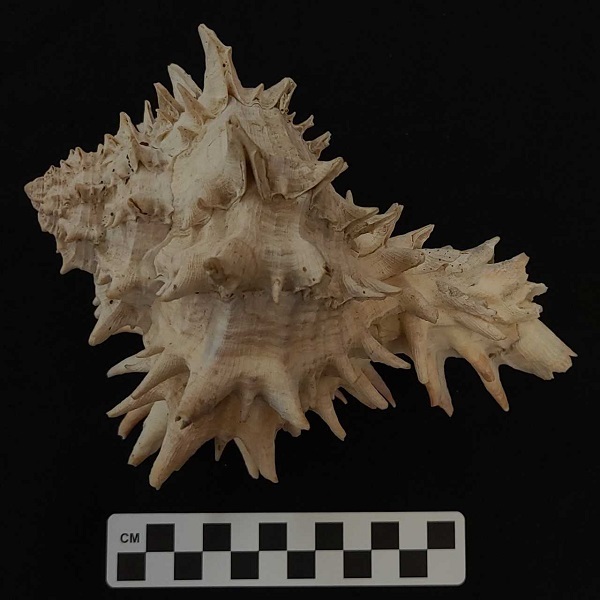
From the Curator: Spikes and Spines

What is so great about a Mollusk shell having spines or spikes? We could say they are pretty and even spectacular, and that would be true. However, they actually have a very specific purpose in the life of mollusks.  Let us imagine we are a Clam (Bivalve). We do not have hands or tentacles that […]

Celebration: Earth | April is all about our Earth at HMNS

Although Earth Day is officially set worldwide for Thursday, April 22, 2021, the Houston Museum of Natural Science is celebrating our planetary home throughout April with Celebration: Earth. All month long, Houston’s science museum is concentrating on our shared home with special nature- and conservation- themed exhibits, tours, and activities for everyone. “Because nature is […]

The Inspiring Story Of World’s Creepiest Parrot: The Kea

It’s October, time to take our yearly dose of fright around the campfire and let out all our heathenish mischief before we have to act like angels during the holidays, right? Yes, we need October. But honestly it’s not because we’re all evil. The fact is that scaring the whits out of our friends and […]

Return to Paraguay: Conserving the Taguá, a Living Fossil

In 1972, mammalogist Ralph Wetzel and colleagues were studying armadillo ectoparasites in the Paraguayan Chaco when they came upon a peccary (what we call javelina in Texas) that didn’t look like those already known to science. The result was Catagonus wagneri – the Chacoan peccary, known only from a fossil discovered in 1930 by Argentinian […]

Go Back in Time with the Hadza: Last of the First Movie Screening

There are fewer people connected to nature now than ever before—and no one connected to it in the same way as the Hadza. One of the last hunter-gather groups on earth, the Hadza have lived sustainably off the bounty of their ancestral homeland in Africa’s Rift Valley for at least 50,000 years. But their unique […]

We’d like to introduce you to the four new species of African house bats

Editor’s note: This blog post is a summation of “New Species of Scotophilus (Chiroptera: Vespertiliondae) from Sub-Saharan Africa,” written by HMNS Curator of Vertebrate Zoology Daniel M. Brooks and John W. Bickham, and published as a monograph in the Occasional Papers of the Museum at Texas Tech University. Sub-Saharan Africa is a hotbed of biological diversity. A […]

Copper, corrosion and curbing the damaging effects of Bronze Disease

Editor’s Note: Alexis North is a third-year graduate student in Conservation of Archaeological and Ethnographic Materials at UCLA. She specializes in the conservation of archaeological objects and is working at the Michael C. Carlos Museum at Emory University this summer, preparing a group of objects for display here at HMNS. Read the first blog from […]


Editor's Picks The Real Moon Hoax That You Haven’t Heard Of Is Darwin relevant today? Oh The Hermannity! The Story of Houston’s Most Beautiful Green Space A Few Member Benefits Most HMNS Members Don’t Know About What The Loss Of The Museu Nacional in Rio de Janeiro’s Collections Means To The World What Is The Deal With Brontosaurus?!
 

Stay in the know.
Join our mailing list.